

Free written scope consultation - allowances, timeline, and change-order rules on paper before a single trade is scheduled
CGI Driveway & Pavers: The San Antonio Owner’s Guide
If you’re holding a failed CGI driveway or paver component and need it matched, priced, and installed without a runaround, here’s the short version: we stock common CGI-compatible driveway and paver parts on our trucks, and most swaps in San Antonio run between $250 and $1,800 installed depending on the component and the scope of the repair. The usual story we hear starts the same way: a paver shifts after a hard rain, a driveway edge crumbles near the curb, or a section settles and now every tire hits it on the way in. You notice it every single day, and it only gets worse.
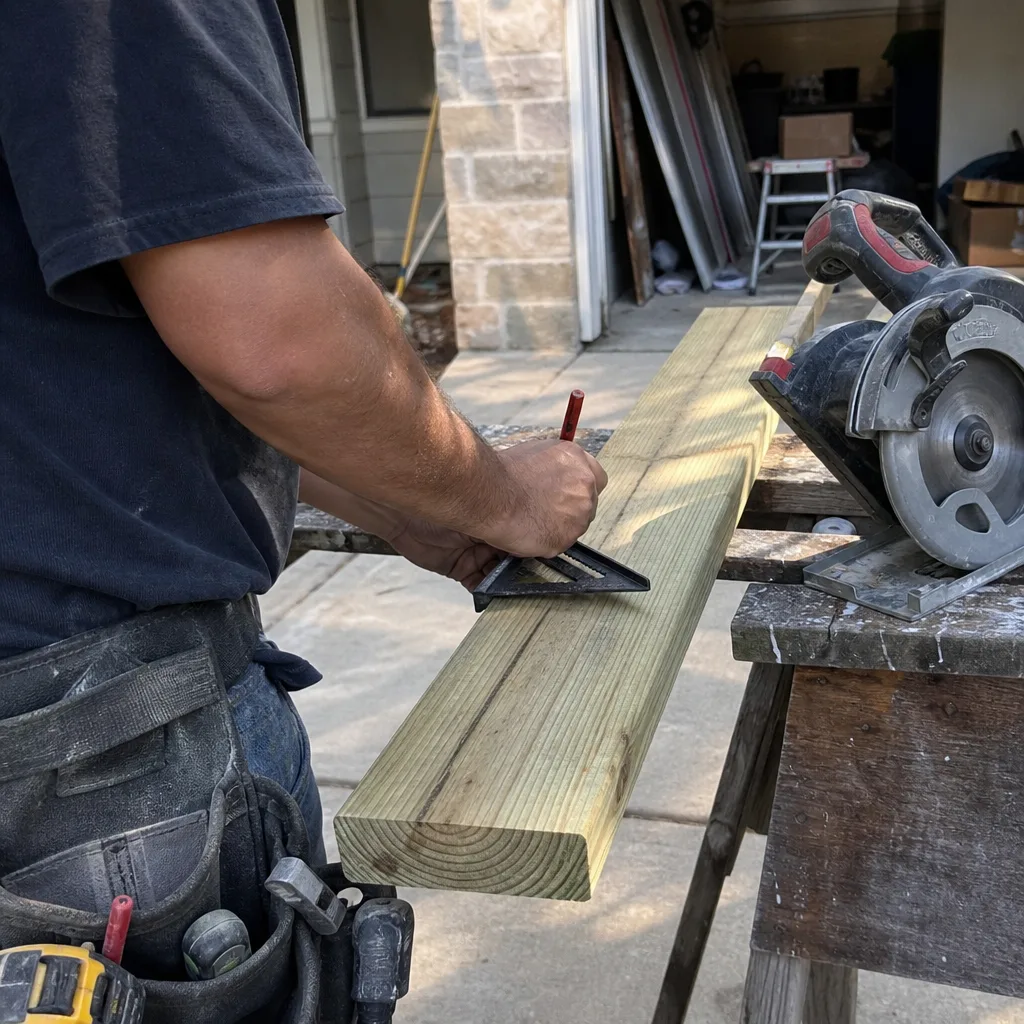
Most homeowners don’t discover the failure until water has already done the quiet work underneath: a low spot forms, sand washes out, and the paver that was fine last season now rocks underfoot. That’s the point where a $200 fix becomes a $2,000 replacement if you wait through one more Texas storm season. We’ve been called out to enough of these in neighborhoods like Stone Oak, Alamo Heights, and Helotes to know the pattern. CGI pavers and driveway systems are solid products, but San Antonio’s clay soil and flash-drainage cycles stress the base layer harder than most installs were ever designed for.
If you’re weighing repair versus full replacement, start with the section below on cost, then call us at (432) 547-6806. We’ll tell you over the phone whether it sounds like a $300 fix or a $3,000 project before we ever put a wheel on your driveway. That’s how we work here: written price before any work starts, no surprises at the invoice.
Which CGI Models This Applies To
CGI produces a range of concrete paver and driveway surfacing systems, and the part you need depends on which line your home was installed with. The most common CGI lines we service across San Antonio include their interlocking concrete pavers (typically 60mm or 80mm thickness for residential driveways), their permeable paver systems designed for drainage compliance, and their precast concrete driveway slabs and edging components. Here’s the compatibility gotcha most owners run into: CGI’s 60mm pavers are rated for pedestrian and light-vehicle use, but a driveway that regularly sees a full-size pickup or SUV really should have been built with 80mm units. We see this mismatch constantly in San Antonio, where half the households own a truck. If your pavers are cracking under normal use, thickness is the first thing we check.
To identify your exact CGI part, look for the manufacturer stamp on the underside of a loose paver or the edge of a slab. Most CGI products carry a molded code indicating the series, color batch, and production date. If the stamp is worn or buried, we can match by measuring the dimensions and comparing against CGI’s current catalog. On the aftermarket question: there are quality third-party pavers that visually match CGI colors closely, but we’ve learned the hard way that color-batch drift between manufacturers shows up badly in San Antonio’s harsh UV. For visible repairs, we generally recommend sticking with genuine CGI product or an aftermarket equivalent from a supplier who can verify batch color before you commit. For subsurface components like base panels, edge restraints, and drainage channels, a high-quality aftermarket part usually performs identically and saves you money. We’ll walk you through that decision based on where the part sits and whether it’s visible.
Styles & brands we work with







Signs Your CGI Driveway & Pavers Is Failing
- Rocking or shifting pavers underfoot. This means the bedding sand has eroded from beneath the pavers, usually due to water intrusion at the edge or a low spot that channels runoff underneath. Left alone, the pavers crack at the stress points and the repair expands from a re-sand to a full reset.
- Visible cracks running across multiple pavers in a line. A straight-line crack pattern almost always points to a failing base layer or edge restraint, not the paver itself. In San Antonio’s expansive clay, the soil swells and contracts with moisture, and if the base wasn’t compacted in lifts, the pavers crack along the settlement line. Replacing the cracked pavers without fixing the base just means you’ll replace them again next spring.
- Standing water or soft spots forming after rain. CGI permeable systems are designed to drain, so pooling usually means the joint material or the drainage layer underneath has clogged with fine sediment. San Antonio’s intense but short rain bursts dump a lot of water fast, and a partially clogged system backs up quickly. This one compounds fast if you don’t address it.
- Edges crumbling or separating from the border restraint. The edge restraint is what keeps the entire field locked together. When it fails, pavers at the perimeter spread outward, gaps open, and the sand washes out. You’ll notice the border paver sits lower than the rest or a gap has opened between the driveway and the lawn line.
- Sunken depressions where vehicles park. If your CGI driveway has developed two shallow troughs where the tires sit, the sub-base wasn’t adequate for the load, or the native soil beneath has shifted. This is a structural issue, not a paver issue, and it typically requires lifting the affected section, re-compacting, and re-installing.
See the difference
 Before
 After
After Before
 After
After Before
 After
AfterReplacement Cost & What’s Included
For San Antonio homeowners, here’s what you should expect to pay for CGI driveway and paver work:
- Driveway sealing: $250 – $700
- Paver repair (isolated section, re-sand and re-set): $400 – $1,500 depending on square footage and base condition
- Paver driveway installation (full new install): $7,000 – $18,000
- Driveway replacement (tear-out and reinstall): $5,000 – $14,000
- Paver patio installation: $3,500 – $11,000
What drives the price more than anything is what’s underneath. If the failure is in the base layer (and in San Antonio with our clay soil, it often is), you’re paying for excavation, re-compaction, and new base material, not just swapping pavers. The parts themselves are usually the smaller line item. Every quote we write includes the parts, labor, haul-away of the old material, and the base work in one line-item so there’s zero ambiguity about what you’re approving. And every job carries the 365-Day Done Right Promise in writing: if it’s not done right, we make it right, for a full year after we pack up. You’ll get a written price before any work starts, no change orders snuck onto the invoice.
DIY or Call Us?
Here’s the honest split. If you have a single paver that’s rocking or a small section where the sand has washed out between joints, you can absolutely re-sand that yourself. Sweep polymeric sand into the joints, mist it with water, and let it set. That’s a Saturday morning job. What you shouldn’t do is attempt any repair that involves lifting more than a handful of pavers, any work that requires re-compacting the base, or anything that touches the edge restraint. The reason is simple: once you lift pavers past the edge field, the whole interlocking system loses tension, and putting it back correctly requires a plate compactor, proper base material, and a feel for drainage slope that only comes from doing this work repeatedly. We’ve followed more than a few DIY attempts where the homeowner got it level but somehow made the water run toward the garage. That’s a worse problem than the one they started with.
If you’re unsure whether your project is a re-sand or a reset, call (432) 547-6806 and describe what you’re seeing. We’ll give you an honest read over the phone, and if it needs a pro, we’ll put a written price in your hands before anything starts.
FAQs
A properly installed CGI paver driveway in San Antonio should last 20 – 30 years on the paver surface itself, with the base layer typically needing rework around the 15-year mark due to our clay soil movement. If you’re seeing failures before year 10, it’s almost always a base or drainage issue, not the pavers. Call (432) 547-6806 and we’ll tell you what you’re actually looking at.
In most cases, a cracked paver should be replaced, not repaired. Paver repair kits and fillers exist, but they’re visible, they don’t hold up to vehicle traffic, and in San Antonio’s UV they degrade within a season. A single matching replacement paver is usually a $50 – $150 fix. For an exact quote on your particular paver, call us at (432) 547-6806.
A single paver swap or small section re-set typically takes half a day including compaction and cleanup. A larger driveway repair involving base rework runs one to two days. A full driveway replacement is usually a three to five day project depending on square footage and access. We’ll give you a firm timeline in writing before work begins.
We stock the most common CGI paver sizes, edge restraints, and joint materials on our trucks, and we can source specific series and color batches from local San Antonio suppliers within one to three business days. We’re an independent service provider, not affiliated with CGI directly, so we match against the CGI catalog and tell you exactly what’s available before you commit. For specialty or discontinued colors, call (432) 547-6806 and we’ll check current availability while you’re on the phone.
Written by Luca Romano, Owner, Sawyer Remodel San Antonio at Sawyer Remodel San Antonio, serving San Antonio and nearby areas.


