





Free written scope consultation - allowances, timeline, and change-order rules on paper before a single trade is scheduled
Quikrete Roofing: The San Antonio Owner’s Guide
If you have a Quikrete roofing product that’s cracked, lifted, or letting water through, here’s the short version: we stock and install Quikrete-compatible roofing materials across San Antonio, and a typical repair or replacement on a Quikrete roof coating or patch job runs $400 to $1,800 depending on the surface area and how far the failure has spread. Most owners discover the problem the same way: a water stain on the ceiling after a hard San Antonio storm, or visible flaking along a parapet wall during a routine gutter cleaning.
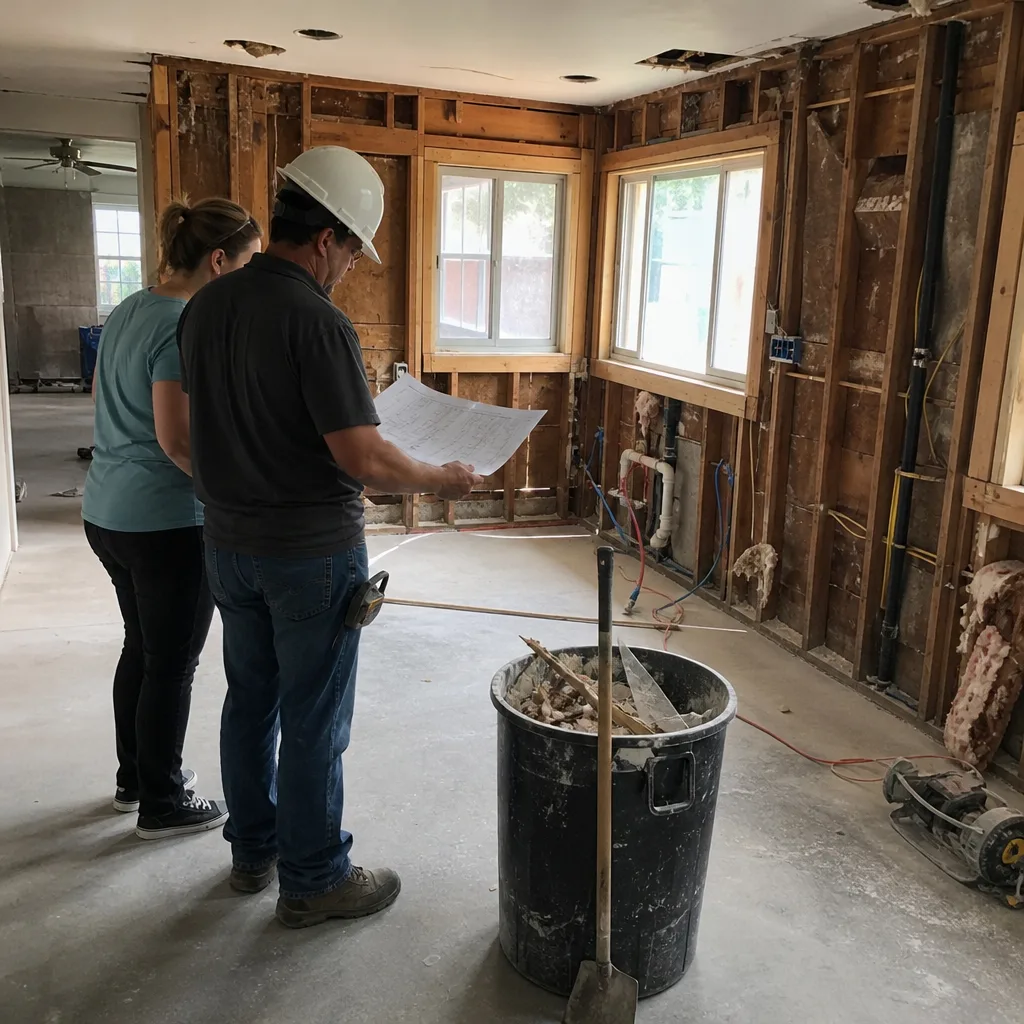
Quikrete makes cement-based roofing products, not shingle systems. That distinction matters more than most people think. Their roofing line is built around patching compounds, sealants, and coatings designed to bond to concrete, masonry, and some metal surfaces. When those products fail, they fail at the bond line, not in the middle of a shingle field. That’s why you can’t just call any roofer with a bundle of shingles and expect a fix.
Key Takeaways
- Quikrete roofing products are cementitious coatings and patches, not shingle systems
- San Antonio heat cycling is the number one cause of bond-line failure on these products
- Installed repair pricing in San Antonio runs $400 to $1,800 for most Quikrete roofing fixes
- We carry Quikrete-compatible materials on our trucks for same-week service
- Sawyer Remodel San Antonio is an independent contractor, not affiliated with Quikrete
Which Quikrete Models This Applies To

Quikrete’s roofing line is narrower than their concrete line, and that’s a good thing for compatibility. The main products we see on San Antonio roofs are the Quikrete Roof Sealant, their Wet Patch Roofing Cement, and their Rubberized Roof Repair compound. Each one has specific use cases, and here’s the gotcha most homeowners hit: Quikrete’s standard concrete patch and their roofing patch are not interchangeable. The roofing-specific compounds include polymers and fibers that allow for expansion and contraction on a roof surface that goes from 40 degrees on a January night to 140 degrees on an August afternoon.
Identifying what’s on your roof is usually straightforward. The bucket or tube will say “roofing” explicitly. If the label is gone, take a sample of the failed material to any home center and compare it side by side. We also see a lot of flat-roof coatings where a previous owner used Quikrete’s general-purpose sealant instead of the roofing version. That mistake shows up as alligator cracking within two San Antonio summers.
On the OEM versus aftermarket question: Quikrete is the product itself, not a roofing system manufacturer like GAF or CertainTeed. So there’s no “OEM part” in the traditional sense. What matters is matching the chemistry. For most repairs, we use genuine Quikrete products because the polymer blend has been tested for roof-surface conditions. Aftermarket equivalents exist, but we’ve seen too many fail early on Texas sun-baked surfaces to recommend them without a specific reason.
Styles & brands we work with







Signs Your Quikrete Roofing Is Failing
- Alligator cracking across the coating surface. This means the product lost its elasticity and can’t move with the roof deck anymore. Once you see this pattern, water is working its way into the micro-cracks and expanding them with every heat cycle.
- Lifting or peeling at the edges of the patch. The bond line failed first, which means moisture got underneath and broke the adhesion. In San Antonio, this almost always starts along the west-facing edge where afternoon sun hits hardest.
- Water stains on interior ceilings after moderate rain. Quikrete roof patches are surface barriers. If water is getting through a patched area, the patch has lost its integrity at the substrate level, not just on top.
- White chalky residue running down the roof. That’s the cement breaking down and leaching out of the compound. It means the material is no longer waterproof, even if it looks intact from a distance.
- Soft or spongy spots under the coating. The roof deck below is rotting. By the time you feel this underfoot on a flat roof, the repair is no longer a patch job; it’s a tear-out and re-coat.
See the difference
 Before
 After
After Before
 After
After Before
 After
AfterReplacement Cost & What’s Included

For a Quikrete roofing repair in San Antonio, the installed price range is $400 to $1,800. A small isolated patch, say a 4-foot by 4-foot area around a vent penetration, falls at the low end. A full re-coat of a flat roof on a typical Alamo Heights or Terrell Heights home runs toward the high end. The spread comes down to three things: how much failed material has to be removed, how much surface prep the new coat needs, and whether the underlying deck has moisture damage that has to be addressed before the new product goes on.
Every quote we write in San Antonio includes the parts, the labor, the surface prep, and the cleanup in one line-item price. You approve that number before we start. If we find hidden damage underneath the failed Quikrete coating, we stop, send you photos, and get your written approval on any change before proceeding. No surprises on the invoice. The work carries our 365-Day Done Right Promise: if the repair fails within a year, we make it right at no charge.
DIY or Call Us?
The honest answer depends on what failed. If you have a small crack along a parapet cap and you can reach it safely from a ladder that’s properly set, a tube of Quikrete Roof Sealant applied per the label is a reasonable Saturday project. Clean the surface, let it dry fully, tool it in with a trowel, and don’t rush it. If it’s a flat roof that requires walking on, a large failed patch, or anything involving the edges where falls become a real risk, call us. Roof work on a San Antonio flat roof means dealing with reflected heat, brittle decking, and often concealed rot. That’s not a DIY afternoon; that’s a job for someone who does it weekly.
Luca Romano grew up in East Los Angeles and learned the trade at LA Trade-Tech before spending decades on roofs and remodels across the Southwest. He’s walked enough sketchy San Antonio rooftops to know when a patch is a patch and when it’s a rescue mission. The craft comes first. Everything else follows. Call (432) 547-6806 if you’re not sure which one you’ve got.
FAQs

Realistically, three to five years on a properly prepped and applied coating before you’ll see the first signs of weathering. San Antonio’s UV load and heat cycling age these products faster than the manufacturer’s general guidelines suggest. A well-maintained coating inspected annually will outlast one left untouched. For an exact assessment of your roof, call (432) 547-6806 for a free estimate.
Isolated failures can usually be repaired by cutting out the failed section, cleaning the substrate, and applying a new coat with proper overlap onto sound material. If the failure is widespread or the deck underneath is soft, a full re-coat or deck repair is the honest answer. We’ll tell you which one you need after we look at it, and the quote comes with a written price before we start.
Most San Antonio Quikrete roof repairs finish in one day, including surface prep and cleanup. Larger re-coats on full flat roofs can run two to three days, largely because each coat has to cure before the next goes on. We schedule the work around weather windows so the product cures properly. Call (432) 547-6806 and we’ll give you a straight timeline for your specific roof.
Yes, we keep Quikrete Roof Sealant, Wet Patch Roofing Cement, and their rubberized repair compound stocked on our trucks. That means we can usually start the repair the same week you call, without waiting on a supply order. We also work with other name brands like GAF and CertainTeed for full roofing systems, so you’re never locked into one product line if the job calls for something different.
If you’re dealing with a failed Quikrete roof patch or coating in San Antonio, call (432) 547-6806 to schedule a free estimate. We’ll get eyes on the roof, give you a written price, and tell you exactly what needs to happen, before any work starts. That’s how we’ve run every job since 2005.
Written by Luca Romano, Owner, Sawyer Remodel San Antonio at Sawyer Remodel San Antonio, serving San Antonio and nearby areas.


