





Free written scope consultation - allowances, timeline, and change-order rules on paper before a single trade is scheduled
James Hardie Fence Installation: The San Antonio Owner’s Guide
A full James Hardie fence installation in San Antonio typically runs $3,500 to $9,000 installed, depending on linear footage, fence height, and whether we’re pulling old posts or starting fresh. We stock Hardie-compatible fence panels and trim on our trucks, so most jobs go from quote to finished fence within five to seven business days. Most San Antonio homeowners call us after they notice a bottom rail wicking moisture, a post leaning after summer storms, or panels that have started to swell at the cut edges where the previous installer skipped sealing.
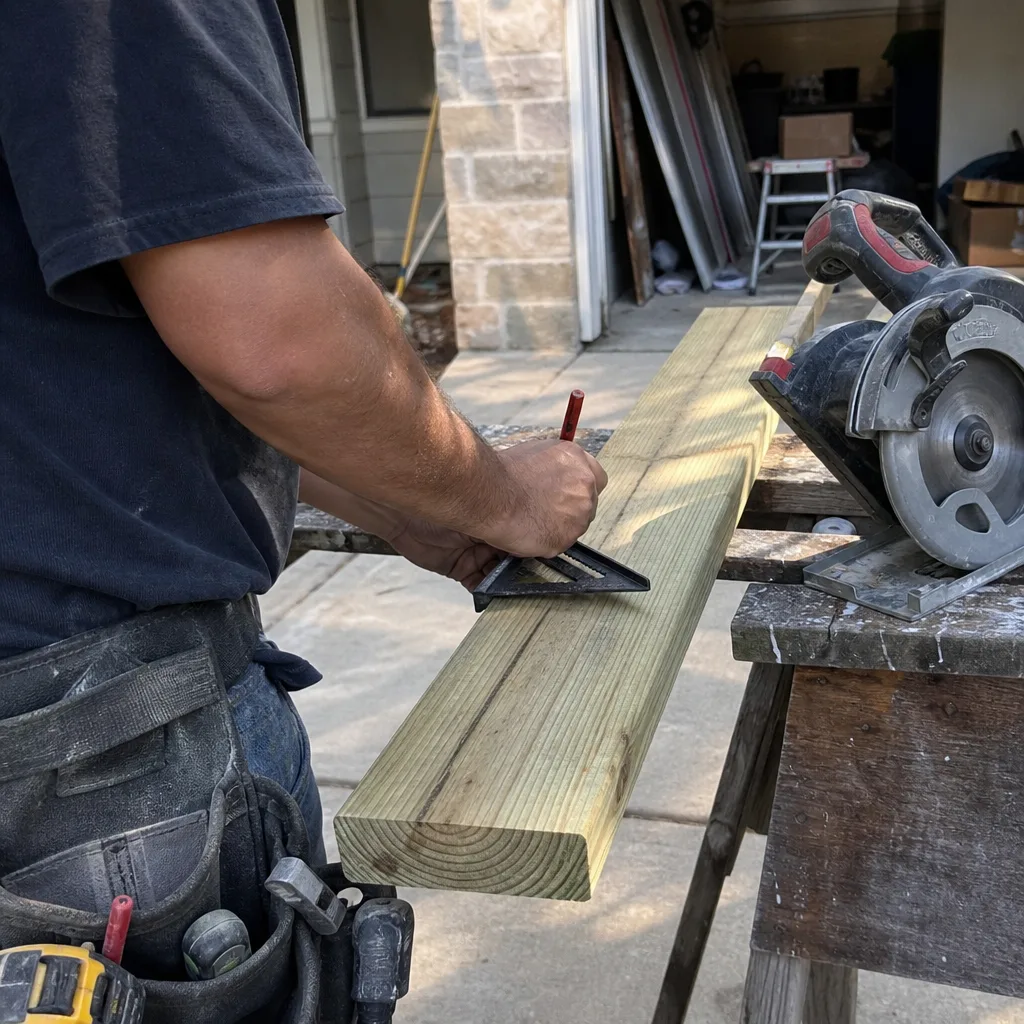
Here’s the thing about fiber cement fencing: when it’s installed right, it holds up to San Antonio’s heat and humidity better than wood. When it’s installed wrong, it fails in predictable ways. We see the same three or four failure points across Alamo Heights, Stone Oak, and Helotes, and they’re almost always installation issues, not product defects. This page covers what goes wrong, what it costs to make right, and how we handle James Hardie fence work at Sawyer Remodel San Antonio.
Which James Hardie Models This Applies To

James Hardie doesn’t manufacture a standalone fence panel line the way they do plank siding. What San Antonio fence contractors install as “James Hardie fences” are typically HardiePlank lap siding panels or HardiePanel vertical sheets mounted to a framed fence structure. The most common setup we build is HardiePanel 4×8 or 4×9 sheets on 4×4 or 6×6 pressure-treated posts, trimmed with HardieTrim boards at the rails and corners. If you’re matching an existing fence, the panel thickness matters: HardiePanel comes in 5/16-inch and 7/16-inch, and mixing thicknesses on one run creates visible seams that fail faster.
For aftermarket compatibility, we use Hardie-labeled panels when matching brand-new sections, but there are quality fiber cement panel equivalents that perform identically at a lower material cost. Luca Romano’s take after years of San Antonio installs: the panel itself matters less than the gap clearance, fastener type, and edge sealing. Fiber cement needs a minimum 1/8-inch gap at panel joints and 2 inches of clearance above grade, or capillary action pulls ground moisture into the material. If your fence installer didn’t know that, your fence is already on borrowed time.
Styles & brands we work with







Signs Your James Hardie Fence Installation Is Failing
- Bottom edge swelling or flaking. Panels set within 2 inches of soil wick moisture constantly. In San Antonio’s clay-heavy soil, the ground stays damp longer after rain, and the lower 6 inches of panel starts to delaminate within two to three years.
- Rust streaks below fastener lines. Fiber cement eats standard electroplated screws. If you see rust trails running down panel faces, the installer used the wrong hardware. This is the number one avoidable failure we correct on Hardie fence replacements.
- Corner trim cracking or separating at miters. HardieTrim expands and contracts through San Antonio’s temperature swings. Caulked miters fail quickly; properly gapped miters with backer rod last. Cracked corners mean moisture is already inside the trim.
- Post lean after storms. San Antonio gets sudden downpours and occasional straight-line winds. If posts weren’t set below the frost line and backfilled properly, the whole fence walks. We set fence posts 24 to 30 inches deep in concrete here, and in some clay pockets we go deeper.
- Panel blowout at the top rail. The top of a fiber cement fence catches wind unless it’s capped with a continuous rail. Missing caps or undersized nails at the header let wind load flex the panel until it cracks horizontally.
Replacement Cost & What’s Included
In San Antonio, a James Hardie fence installation runs $3,500 to $9,000 for most residential jobs. Here’s the breakdown of what moves the price:
- Linear footage: Material and labor scale directly; a 50-foot side-yard fence and a 200-foot perimeter enclosure are different jobs.
- Existing fence demolition: Haul-off of an old wood or chain-link fence adds $500 to $1,200 depending on scope.
- Post condition: If your existing posts are straight, pressure-treated, and structurally sound, we can re-skin a fence for less. If they’re leaning or rotted, new posts go in.
- Panel thickness and trim style: 7/16-inch panels cost more than 5/16-inch, and full HardieTrim wrapping is an upgrade over minimal trim.
Every quote from Sawyer Remodel San Antonio is a written price before work starts. That price includes materials, labor, demolition if needed, and disposal. The invoice you approve is the invoice you pay, no change orders, no “we didn’t know the clay was that bad” story. Every fence installation carries our 365-Day Done Right Promise in writing: if something’s not right, we make it right within the first year, on us.
DIY or Call Us?
Fiber cement fencing isn’t high-voltage dangerous like a garage door spring, but it will hurt you if you handle it wrong. A 4×8 HardiePanel sheet runs 60 to 80 pounds, and cutting it kicks up silica dust that you don’t want in your lungs without a proper respirator. The safe DIY tasks are inspection and planning: check your gap clearances, look for rusted fasteners, measure your linear footage, and map where posts sit. The actual installation requires a second set of hands, the right blades, stainless or hot-dipped galvanized fasteners, and an edge-sealing routine that most YouTube tutorials skip.
Most importantly, fiber cement needs precise handling on cut edges. An exposed cut edge is a moisture entry point. We seal every field cut with an approved edge sealant, and that step is the difference between a fence that lasts fifteen years in San Antonio and one that needs panel replacement in three. If you’d rather not gamble on it, call (432) 547-6806 and we’ll put eyes on your fence and give you a written price.
See the difference
 Before
 After
After Before
 After
After Before
 After
AfterHow Much Does a James Hardie Fence Cost in San Antonio?
A James Hardie fence installation in San Antonio costs $3,500 to $9,000 fully installed, with most standard residential jobs landing between $4,500 and $7,000. The range depends on footage, post condition, and whether we’re matching existing Hardie products or installing new. Call (432) 547-6806 for an exact quote, estimates are free.
Can a Failing James Hardie Fence Be Repaired Instead of Replaced?
Yes, in many cases we can repair a failing James Hardie fence by replacing individual panels, sealing exposed edges, and resetting leaning posts rather than doing a full replacement. Repair work typically costs $500 to $2,500 depending on how many panels are involved and whether post work is needed. If the fence is under a year old and we installed it, the 365-Day Done Right Promise covers the repair, no charge.
How Long Does a James Hardie Fence Installation Take in San Antonio?
Most James Hardie fence installations in San Antonio take three to five working days from post-setting to final trim, assuming normal weather and no major surprises underground. We give a live arrival time with our appointment reminder and send before-and-after photo updates so you’re not wondering whether we’re showing up. The concrete post footings need a day to set before we hang panels, so that timeline is the floor, not a sales pitch.
Can You Match My Existing James Hardie Siding or Fence Color?
We can match existing James Hardie ColorPlus finishes and most painted Hardie surfaces, though paint-match on older sun-faded sections won’t be invisible. For painted Hardie fences, we recommend repainting the full run after panel replacement so the new sections blend. If you’re matching a current Hardie color like Cobble Stone or Monterey Taupe, we’ll verify the color code at the material yard before installation day.
One more note from Luca Romano, who’s been doing this since he learned the trade at Los Angeles Trade-Technical College and has been working San Antonio for years now: a fence is only as good as what’s holding it up. We still do a final walkthrough on every fence install, checking post plumb, edge gaps, and trim alignment before we call it done. The craft comes first. Everything else follows.
Written by Luca Romano, Owner, Sawyer Remodel San Antonio at Sawyer Remodel San Antonio, serving San Antonio and nearby areas.


