
Free written scope consultation - allowances, timeline, and change-order rules on paper before a single trade is scheduled
James Hardie Home Additions & ADU: The San Antonio Owner’s Guide
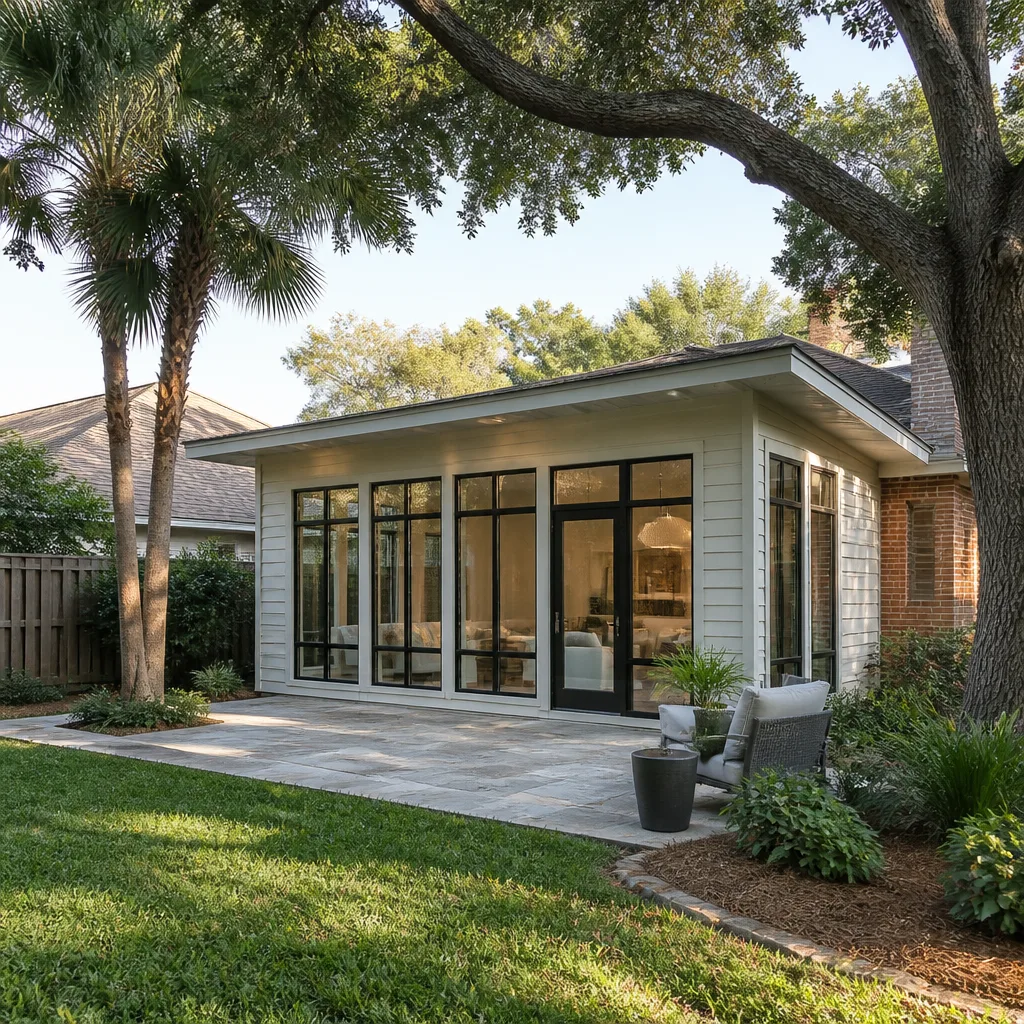
We install James Hardie siding, trim, and panels on home additions and ADUs across San Antonio, with most projects running between $45,000 and $130,000 depending on square footage and scope. If you’re planning an addition or detached ADU and want Hardie board exterior work done right the first time, we stock the common James Hardie profile sizes on the truck and can usually start within a few weeks of permitting. Most homeowners call us after seeing failed fiber-cement siding on an existing addition – cracked planks near the foundation line, swollen edges around windows, or paint that won’t hold because moisture got behind the boards.
Which James Hardie Models This Applies To
James Hardie makes three main exterior product lines we work with on San Antonio additions and ADUs: HardiePlank lap siding (the horizontal boards), HardiePanel vertical siding (the 4×8 sheets), and HardieTrim boards (the corner and window trim pieces). The critical compatibility gotcha most people miss: HardiePlank comes in 5.25-inch and 8.25-inch exposure widths, and you cannot mix exposures on the same wall without it looking wrong. The 8.25-inch exposure gives you that wider, more modern shadow line that’s popular on new ADUs in Alamo Heights and Terrell Hills right now. We use genuine James Hardie products for structural and warranty reasons – the 30-year non-prorated substrate warranty only applies if the install follows Hardie’s published fastening schedule and clearance specs. Generic fiber-cement from other manufacturers may cost 15 to 20 percent less on paper, but we’ve seen too many San Antonio homes where the cheaper board started delaminating at the bottom edge after three or four summers. For San Antonio’s climate specifically, we use Hardie’s HZ10 zone products, which are engineered for the freeze-thaw cycles and high humidity swings we get here. The HZ5 product line, built for wetter coastal climates, is the wrong spec for central Texas and can void warranty coverage.
Styles & brands we work with







Signs Your James Hardie Home Additions & ADU Is Failing
- Swelling or softness at the bottom edge of siding boards. This is the number one failure point in San Antonio. Fiber-cement needs at least 6 inches of clearance above grade, and when landscapers pile mulch or soil against a slab addition, water wicks up and breaks down the board from the bottom.
- Paint peeling in horizontal bands that follow the board pattern. That pattern means moisture is trapped behind the siding, not that the paint failed. Caulk the butt joints incorrectly and water gets in, then sits against the back of the plank.
- Cracks running vertically through a plank, often near a fastener. Overdriven nails or screws create stress points. In San Antonio’s clay soil, the slab shifts enough that a rigid board under tension will crack at the weakest point around the nail head.
- Gaps opening at butt joints between boards. Hardie board expands and contracts with temperature. Installers who butt boards tight against each other get gaps in summer; installers who leave proper 1/8-inch gaps and use the recommended joint flashing don’t get callbacks.
- Mold or mildew staining on shaded walls of the addition. San Antonio’s humid months are brutal on north-facing walls that never dry out. Hardie board itself resists mold, but persistent staining usually means there’s water getting behind the board through a failed window flashing or roof-to-wall transition.
Replacement Cost & What’s Included
On a San Antonio home addition or ADU, full James Hardie exterior envelope work – siding, trim, flashing, painting – typically runs $45,000 to $130,000 depending on the wall area, number of windows, and whether we’re also replacing roof-to-wall flashing and water-resistive barrier underneath. Smaller scopes, like re-siding one wall of an existing addition or replacing failed trim boards, fall on the lower end or below that range depending on access and material. Every quote includes the James Hardie material, fasteners, flashing, caulk, paint, and labor in one written price before any work starts. We do not do change orders unless you ask for additional work. Our 365-Day Done Right Promise covers the install for a full year: if the siding fails, we come back and make it right at no charge.
See the difference
 Before
 After
After Before
 After
After Before
 After
AfterDIY or Call Us?
Fiber-cement siding is not a casual weekend project. Cutting Hardie board produces silica dust, which requires an approved respirator and dust-control setup – not a standard dust mask. Getting the fastening right matters too: Hardie specifies ring-shank nails or specific screws at precise spacing, and San Antonio wind and hail events will find every shortcut. What you can safely check yourself: look for bottom-edge clearance, trip hazards from piled mulch, and visible cracks. Snap a photo and call us at (432) 547-6806. Luca Romano walks final inspections on this type of work himself because he knows a bad siding install surfaces two years later. The craft comes first. Everything else follows.
FAQs
James Hardie fiber-cement siding properly installed in San Antonio will last the full 30-year substrate warranty and often longer, though the paint layer typically needs recoating every 10 to 15 years. The key variable is whether the installer followed Hardie’s zone specs and clearance requirements. Call (432) 547-6806 if you want us to inspect an existing addition and tell you what’s failing.
Yes, isolated failed boards can often be replaced without redoing the entire wall, especially if the damage is limited to the bottom edge or a single cracked plank. The catch is matching the existing paint and board texture. Call us at (432) 547-6806 with a photo and we’ll tell you honestly whether a patch job makes sense or whether the moisture problem behind the wall is bigger than the visible damage.
A typical single-story ADU in San Antonio takes us one to two weeks for the Hardie siding, trim, flashing, and painting once framing and weather barrier are up. Larger second-story additions or complex gables can run three weeks. Weather delays happen in early summer when afternoon thunderstorms roll through, and we build that into the schedule.
We stock the standard HardiePlank lap profiles, HardiePanel sheets, and HardieTrim sizes used on most San Antonio additions, and we order custom colors or uncommon exposures per job with short local lead times. If you’re matching existing siding on an older addition, we’ll pull samples and confirm the exact profile and paint match before we commit to the job.
Call Sawyer Remodel San Antonio
If you’re planning a home addition or ADU in San Antonio and want James Hardie exterior work backed by a written price and a one-year warranty, call (432) 547-6806. We’ll walk the property, check clearances and flashing, and hand you a written estimate before any work starts. We also work with KraftMaid, Cambria, and Silestone for interior finishes on the same project if you want the whole build handled by one crew under the Relay Visibility Guarantee.
Written by Luca Romano, Owner, Sawyer Remodel San Antonio at Sawyer Remodel San Antonio, serving San Antonio and nearby areas.


